The question most businesses answer too quickly
I've been hearing some version of the same answer lately when I talk with business owners and sales leaders about what happens after the sale: “Oh, we do something like that.”
Every time I hear it, I want to ask the same thing: Do you really? Because there's a big difference between having a few things you do after someone pays you and having a process that actually moves the business forward.
I'm not talking about a thank-you email, asking for a Google review, or leaving someone's name in a CRM until it's time to sell them something else. I'm talking about a process that changes the trajectory of the company.
If you already have a process, where are the results?
Before anyone automatically says, “We already do something like that,” take a hard look at the business. Are you consistently hitting monthly revenue goals? Is the company growing predictably, or does every month feel like starting over? Are your best people staying? Are customers becoming advocates? Is the brand getting stronger without constantly spending more on advertising?
Do people actually like coming to work? And here's one that doesn't get asked enough: Are you excited to wake up and run the business?
If the honest answer to most of those is no, whatever process you think you have probably isn't doing what you need it to do. That doesn't mean the business is bad. It means a major growth opportunity might be sitting right in front of you and getting overlooked.
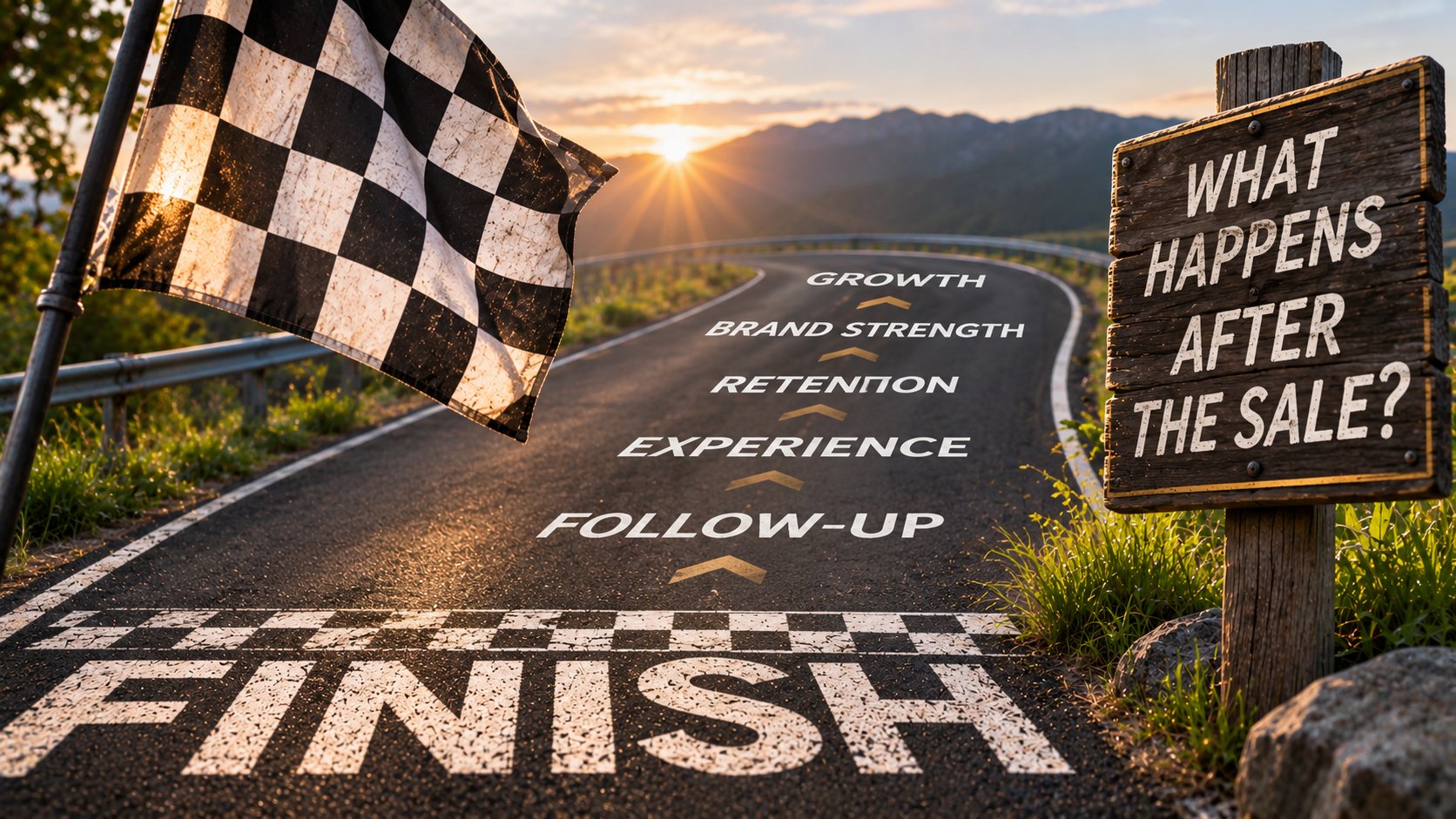
The sale is not the finish line
Most companies pour time, money and energy into acquiring customers. They run ads, train salespeople, build websites, chase leads, schedule appointments, write proposals and work hard to close the deal.
Then the sale happens. In a lot of businesses, the customer gets handed off, the salesperson moves on to the next opportunity, and everyone treats the job as done.
But the sale shouldn't be the finish line. It's the moment you finally get the chance to prove everything you said you'd do. Your advertising tells people who you are. What happens after the sale decides whether they believe you.
Five things a real after-the-sale experience can change
When the experience after the sale is intentionally designed, measured and actually delivered, the impact goes far beyond customer satisfaction.
1. Revenue becomes more predictable
Imagine starting each month knowing a meaningful portion of future business will come from people you've already served—not because you hope they remember you, but because you've built a relationship and a system that gives them reasons to come back, refer others and keep working with you.
You're no longer completely dependent on the next ad campaign or the next batch of leads.
2. The company stops feeling like a revolving door
High turnover isn't always just a hiring problem. Sometimes it's a symptom of inconsistent customer experiences, unclear expectations and no shared understanding of what success looks like after the sale.
When people know what happens next, what they're responsible for and how their work affects the customer, there's less confusion, more accountability and more pride in the work. People have more reason to stay when they feel part of something that's working.
3. Your brand gets stronger
A brand isn't just a logo or a campaign. It's what people believe about your company when you're not in the room. Those beliefs are mostly formed by experience.
Did you communicate? Follow through? Exceed expectations? Remember customers after the work was done? Give them a reason to tell someone else? The answers become your reputation—and your reputation becomes one of your most valuable marketing assets.
4. Your people become more engaged
There's something powerful about working somewhere customers are genuinely happy, expectations are clear and everyone understands the mission. People want to see their effort produce results.
A strong after-the-sale experience doesn't just help customers. It changes the atmosphere inside the business.
5. You start enjoying the business again
Imagine waking up without constantly worrying about where the next sale is coming from. Imagine real confidence in your team, knowing customers are being taken care of, the reputation is improving and the company is moving in the right direction.
Imagine spending more time building the business instead of putting out fires. That's the kind of business most owners wanted in the first place.
So what should actually happen after the sale?
A real process isn't one follow-up call or an automated email sequence. It's a system that answers practical questions:
Who owns the customer relationship after the contract is signed? How and when is the customer contacted? How do you make sure expectations are being met? What happens when something goes wrong? How do you measure satisfaction? When and how do you ask for reviews and referrals? How do you stay connected after the work is finished? How do you spot repeat-business opportunities? How does customer feedback improve operations?
And most importantly, can you demonstrate that the process produces measurable results? Having something documented and having something consistently followed are two very different things.
Stop confusing activity with a system
Sending a thank-you message is an activity. Asking for a review is an activity. Calling a customer six months later is an activity. Those can all be useful.
A system connects them to a larger objective, assigns responsibility, measures performance and creates accountability. It doesn't depend on someone remembering. It doesn't disappear when an employee leaves. It doesn't stop working because the owner gets busy. It becomes part of how the company operates.
Before you say “we already do that”
Ask one more question: If our after-the-sale process is as good as we think it is, what measurable results can we point to?
Not what we intended. Not what we tell people to do. Not what the CRM is technically capable of. What's actually happening? Are customers coming back? Are they referring others? Are employees staying? Is the company growing? Is the experience getting better?
This isn't meant to make anyone defensive. These are conversations for businesses that genuinely want to grow. If you're confident in what you're doing and the results show it, that's great. Keep going. But if you can't answer those questions clearly, don't dismiss the conversation too quickly.
Your next growth opportunity may already be in your database
Most companies are looking for their next customer, and there's nothing wrong with that. Some of the best growth opportunities, though, are already sitting inside the relationships you've worked hard to create.
Your existing customers. Your people. Your reputation. Your processes. Your culture. Your ability to deliver on what you promised, over and over.
The sale creates revenue. What happens after the sale can create a business that actually grows. Those are two very different things.